

Whatsapp: 08123456789

If you live in Bali, you may have wondered what happens after a sofa, carpet, or mattress is professionally cleaned.
Does it dry within a few hours? Can you use it on the same day? And does Bali’s tropical humidity make drying take longer?
The answer depends on the material, cleaning method, thickness, airflow, and indoor humidity. There is no single drying time that applies to every sofa, carpet, or mattress. However, understanding the factors involved can help you plan your cleaning service more easily.
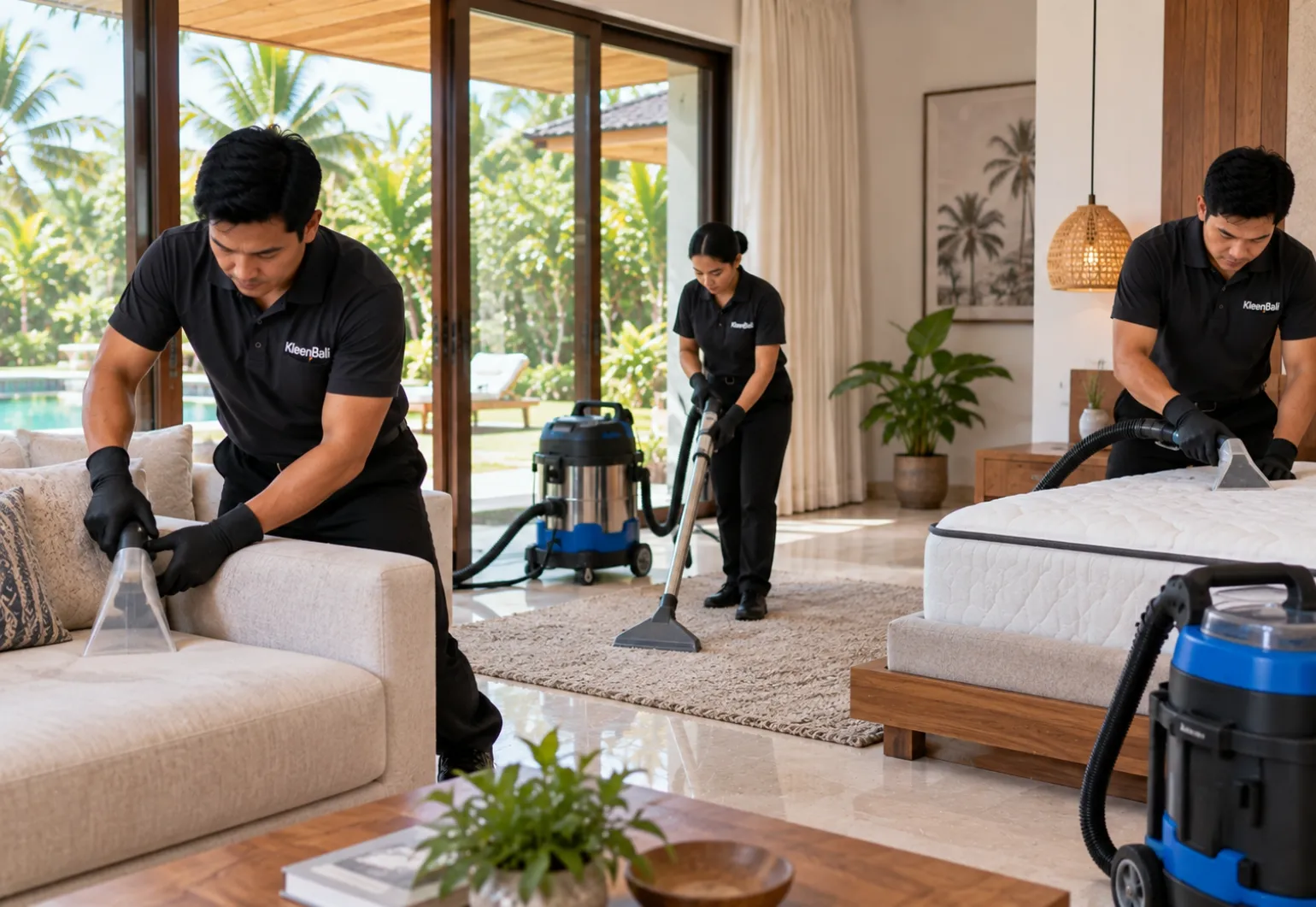
How Long Does Sofa, Carpet and Mattress Cleaning Take to Dry?
As a general planning guide, professionally cleaned upholstery and carpets can often dry within several hours when moisture is properly extracted and the room has good airflow. Some materials may take longer, particularly thick upholstery, dense cushions, or mattresses.
For example, professional upholstery cleaning sources commonly give ranges of around 2–8 hours for many sofas and upholstery items, while carpets may also take several hours depending on the cleaning method and conditions. Some thicker or slower-drying materials can remain damp for longer.
These should be treated as planning ranges, not a guarantee.
A sofa may feel dry on the surface while moisture remains deeper inside the cushions. Mattresses and thick carpets can have the same issue.
For this reason, it is better to wait until the item is properly dry before returning it to normal use.
Related service: KleenBali Sofa Cleaning
What Affects Drying Time in Bali?
Bali’s warm climate does not automatically mean that everything dries quickly.
Humidity is an important factor. When the air already contains a lot of moisture, water evaporates more slowly. Poor ventilation can make the process even slower.
Other factors include:
- Material: Different fabrics and fibres absorb and release moisture differently.
- Thickness: Thick cushions and mattresses can hold moisture longer than thin fabrics.
- Cleaning method: Some professional cleaning methods use more moisture than others.
- Extraction: The amount of moisture removed during cleaning affects what remains in the material.
- Airflow: Good ventilation can help moisture leave the fabric more quickly.
- Indoor humidity: Humid rooms generally dry more slowly.
- Weather and room conditions: Rainy or very humid conditions can make drying more challenging.
The EPA recommends keeping indoor relative humidity below 60%, ideally around 30–50%, because excessive moisture can contribute to mould and other indoor biological contaminants.
Can You Use a Sofa or Mattress on the Same Day?
Possibly, but only if it has dried sufficiently.
The important distinction is between surface dry and fully dry. A sofa can feel dry on the outside while its cushions or padding still contain moisture.
Using a sofa too early can press moisture deeper into the upholstery. A mattress also needs to be properly dry before sleeping on it.
If the item is still noticeably damp, it is better to give it more time rather than covering or using it immediately.
For this reason, when scheduling professional cleaning, consider giving the sofa, carpet, or mattress enough time to dry before you need to use it.
Related service: KleenBali Mattress Cleaning
Can Upholstery Cleaning Help With Dust Mites, Allergens and Odours?
Professional cleaning can help remove accumulated dirt and contaminants from fabrics and upholstered surfaces.
Regular cleaning can reduce the buildup of indoor dust and allergens, including materials associated with dust mites and animal dander. However, cleaning should not be presented as a guaranteed way to completely eliminate dust mites, allergens, or odours.
Dust mites are associated with warm, damp environments, which is one reason moisture control is important in Bali homes.
Odours can also have different causes. Cleaning may help when the smell is associated with accumulated dirt or other material in the upholstery, but persistent odours can sometimes indicate another moisture or contamination problem.
How Can You Prevent a Musty Smell During Drying?
The main goal is simple: help the cleaned material dry properly and avoid trapping moisture.
Good airflow is important. Keep the room ventilated when outdoor conditions allow, and use the property’s existing air-conditioning or ventilation system when appropriate.
Avoid covering a freshly cleaned sofa or mattress while it is still damp. Allow air to reach the material instead.
It is also important to pay attention to indoor humidity. The EPA recommends keeping indoor humidity below 60%, ideally between 30% and 50%, to help control excess moisture.
If a cleaned item remains damp for an unusually long time, the cause may be the material, room conditions, or the amount of moisture involved in the cleaning process.
Planning Professional Cleaning in Bali
Sofa, carpet, and mattress cleaning does not end when the cleaning process is finished. Drying is an important part of the process, especially in Bali’s humid climate.
Instead of asking for one fixed drying time, consider the material, thickness, ventilation, humidity, and cleaning method.
If you need to use the item later the same day, mention this when arranging the service so the cleaning schedule and drying conditions can be considered.
Most importantly, do not rush the drying process. A properly dried sofa, carpet, or mattress is more practical to return to normal use than one that is still holding moisture.
FAQ
Sofa, Carpet & Mattress Cleaning FAQ
Common questions about drying times, humidity, same-day use, allergens, odours, and professional fabric cleaning in Bali.
01 How long does a sofa take to dry after professional cleaning?
Drying time depends on the upholstery material, cleaning method, moisture extraction, ventilation, and indoor humidity. Many professionally cleaned sofas can dry within several hours, but thicker cushions or humid conditions may require longer.
02 How long does a carpet take to dry after professional cleaning?
Carpet drying can take several hours, but the exact time varies with the carpet material, thickness, cleaning method, moisture extraction, airflow, and humidity. A thick carpet or poorly ventilated room may take longer to dry.
03 How long does a mattress take to dry after professional cleaning?
Mattresses can take longer to dry than thin fabrics because their padding can retain moisture. Drying time depends on the mattress construction, cleaning method, ventilation, and humidity. The mattress should be properly dry before it is covered or used for sleeping.
04 Can I use my sofa or mattress on the same day after cleaning?
It may be possible if the item has dried sufficiently, but there is no universal same-day guarantee. A surface can feel dry while moisture remains deeper inside cushions or padding.
It is better to wait until the item is properly dry before returning it to normal use, especially for a mattress.
05 Why does fabric take longer to dry in Bali?
Bali’s warm climate does not always mean faster drying. High humidity can slow evaporation because the surrounding air already contains a significant amount of moisture. Poor ventilation can make drying even slower.
06 Can upholstery cleaning help reduce dust mites, allergens, and odours?
Professional cleaning can help remove accumulated dirt and contaminants from upholstered surfaces. It may also help reduce the buildup of materials associated with dust mites and other indoor allergens.
However, cleaning should not be considered a guarantee that all dust mites, allergens, or odours will be completely eliminated.
07 How can I prevent a musty smell while my sofa or mattress is drying?
Good airflow is important during drying. Keep the room ventilated when conditions allow and use appropriate air-conditioning or ventilation if available. Avoid covering a sofa or mattress while it is still damp.
Keeping indoor humidity under control can also help reduce excess moisture during the drying process.
08 What should I do if my sofa, carpet, or mattress stays damp for too long?
Check the airflow and humidity in the room and allow more time for the material to dry. Thick upholstery, mattresses, and carpets can retain moisture longer than expected.
If the item remains damp for an unusually long period, the material, cleaning process, or room conditions may need to be assessed before normal use.
Need professional fabric cleaning?
Explore the right cleaning service for your sofa, carpet, mattress, or other
upholstered surfaces.