

Whatsapp: 08123456789

Marble and terrazzo floors can make a Bali home or villa look bright, elegant, and well maintained. But over time, that shine can gradually disappear. The surface may become dull, show fine scratches, or develop marks that do not disappear with normal cleaning.
So why does a marble floor lose its shine? And when is professional floor polishing a better option than regular floor cleaning?
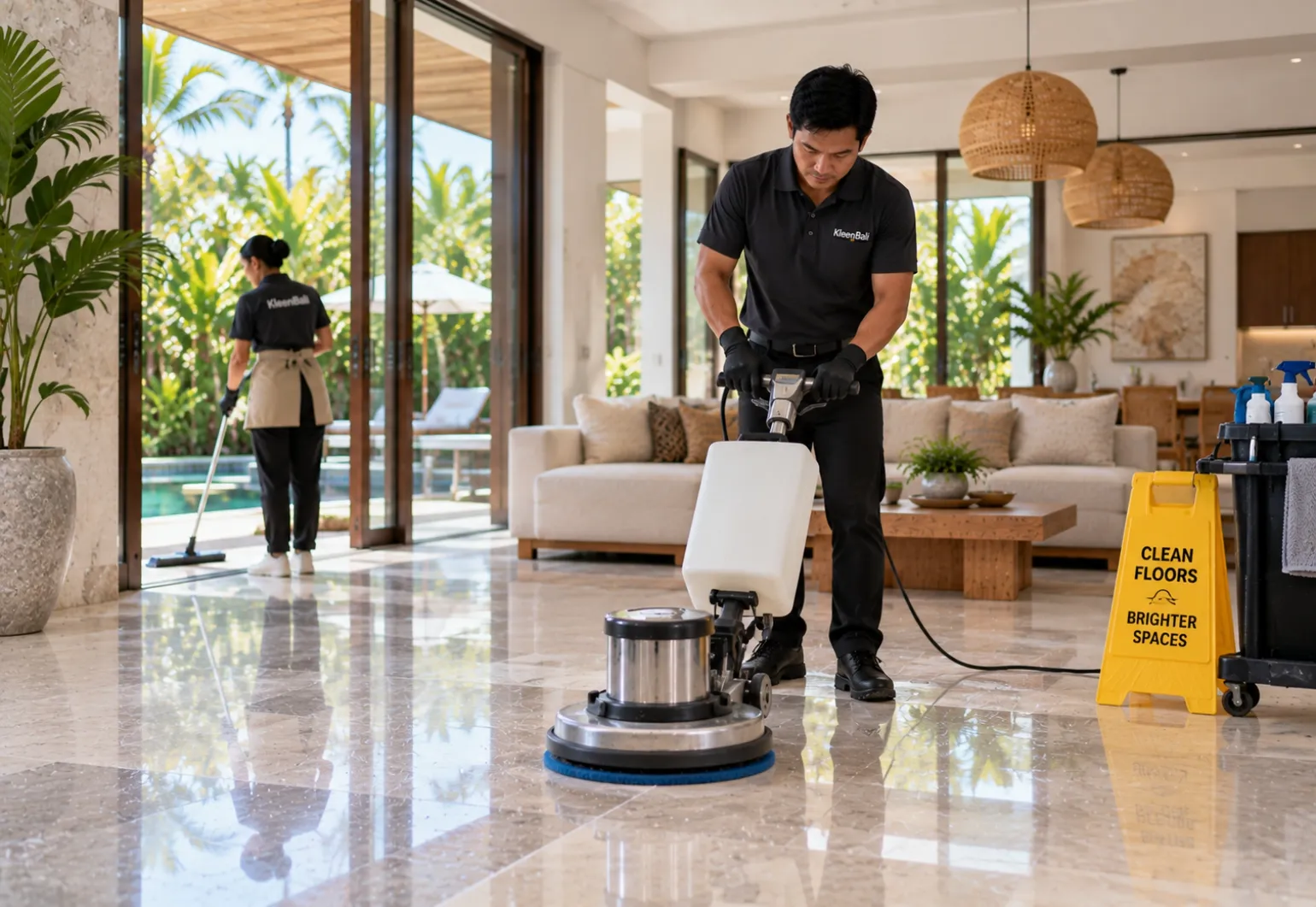
Why Does Marble Lose Its Shine?
Several factors can make a polished stone floor look dull over time.
Daily foot traffic is one of the most common causes. Sand, dirt, and small particles brought indoors can act as abrasives when people walk across the floor. Areas that receive more traffic may become dull or show more visible wear.
Cleaning practices can also affect the surface. Using an unsuitable cleaning product, applying too much product, or using abrasive materials may leave marks or gradually affect the appearance of the stone.
Marble can also develop etch marks when exposed to acidic substances. Marble is a calcium-based stone, so acids can react with its surface and create dull-looking areas. This is different from a normal stain because the surface itself has been affected.
Terrazzo and other stone surfaces can also lose their original appearance through everyday wear, scratches, stains, and unsuitable maintenance.
Floor Cleaning vs Floor Polishing: What Is the Difference?
Regular floor cleaning focuses on removing everyday dirt, dust, spills, and surface contamination. It is part of normal property maintenance and helps keep the floor clean.
Floor polishing, however, addresses the condition and appearance of the floor surface itself.
Professional polishing may help improve dull areas, restore some of the surface shine, and deal with light scratches or certain stains, depending on the material and its condition.
This is why cleaning and polishing should not be treated as the same service. A floor can be clean but still look dull because the problem is no longer simply dirt on the surface.
Related service: KleenBali Floor Polishing
Can Professional Polishing Remove Scratches and Dull Marks?
In some cases, yes.
Professional floor polishing can help treat light surface scratches, dull areas, and certain stains. However, the result depends on the type of floor, the depth of the scratch, the type of stain, and the overall condition of the surface.
Light surface damage may respond well to polishing or surface restoration. Deeper scratches or more serious damage may require a different treatment.
This is why it is better to assess the floor before deciding what process it needs. Polishing is not simply about making a floor shiny. The method should match the material and the condition of the surface.
KleenBali also notes that not every floor can be returned to its original or “like new” condition. The final result depends on factors such as material, wear, scratches, stains, and surface condition.
How Often Should Marble Floors Be Polished?
There is no single polishing schedule that is ideal for every marble or terrazzo floor.
A private home with light traffic may not need polishing as often as a busy villa, office, or commercial property. The frequency can also depend on how the floor is maintained and how quickly visible wear develops.
Instead of following a fixed calendar, look at the condition of the floor.
Signs that it may be time to consider professional polishing include:
- The floor has become noticeably dull.
- High-traffic areas look different from less-used areas.
- Fine scratches are becoming visible.
- Cleaning no longer brings back the previous appearance.
- Certain marks or stains remain after normal cleaning.
- The surface has lost the even shine it once had.
Regular cleaning and suitable maintenance can help reduce unnecessary wear, but polishing may eventually be needed when the surface itself has become worn.
Related service: KleenBali House Cleaning
Why Can Household Floor Cleaners Damage Marble?
Not every floor cleaner is suitable for every type of stone.
Marble is particularly sensitive to acidic substances. Products containing acids, including some cleaners based on ingredients such as vinegar or lemon, can cause etching on marble. The result may appear as a dull or cloudy patch rather than a conventional stain.
Abrasive cleaning products can also scratch certain natural stone surfaces.
This does not mean that marble is difficult to maintain. It means that the cleaning method should be appropriate for the material. For everyday care, using a suitable, non-abrasive and non-acidic cleaner is generally safer for marble than experimenting with strong household chemicals.
If the floor has already developed dull patches, scratches, or stains, simply using a stronger cleaner may not solve the problem. In some cases, the surface needs professional polishing or restoration instead.
When Should You Consider Professional Floor Polishing?
If your marble or terrazzo floor is clean but still looks dull, polishing may be worth considering.
The important point is to identify whether the problem is surface dirt or surface wear. Regular cleaning can deal with dirt and everyday buildup. Professional floor polishing is more appropriate when the appearance of the stone has changed because of wear, light scratches, dullness, or certain surface marks.
For Bali homes and villas, keeping the floor clean is only one part of maintaining the appearance of natural stone. Using suitable cleaning products and arranging professional polishing when the surface begins to show visible wear can help keep the floor looking well maintained for longer.
FAQ
Marble & Floor Polishing FAQ
Common questions about dull marble and terrazzo floors, professional polishing, scratches, stains, and safe floor cleaning in Bali.
01 Why does marble or terrazzo lose its shine in Bali?
Daily foot traffic, dirt and fine particles can gradually wear down a polished stone surface. Unsuitable cleaning products, abrasive materials, stains, and exposure to acidic substances can also make marble or terrazzo look dull.
02 What is the difference between floor cleaning and floor polishing?
Floor cleaning focuses on removing everyday dirt, dust, spills, and surface buildup. Floor polishing addresses the condition and appearance of the floor surface and may help improve dull areas, light scratches, and certain marks.
03 Can professional polishing remove scratches and dull marks from marble?
Professional polishing can help treat light surface scratches, dull areas, and certain stains. The result depends on the type of stone, the depth of the scratches, the type of stain, and the overall condition of the floor.
Deeper scratches or more serious surface damage may require a different treatment, so the floor should be assessed before deciding on the process.
04 How often should marble or terrazzo floors be professionally polished?
There is no single schedule that works for every floor. The right frequency depends on factors such as foot traffic, property use, maintenance, and the condition of the surface.
Instead of following a fixed calendar, consider professional polishing when the floor becomes noticeably dull, develops visible fine scratches, or no longer regains its previous appearance through normal cleaning.
05 Can household floor cleaners damage marble?
Yes. Some household cleaners are not suitable for natural stone. Marble is sensitive to acidic substances, which can cause etching and leave dull or cloudy-looking areas. Abrasive products can also scratch some stone surfaces.
06 Can vinegar or lemon-based cleaners be used on marble?
It is better to avoid acidic cleaners such as vinegar or lemon-based products on marble. Their acidity can react with the stone surface and create etching, which may appear as a dull or cloudy patch.
07 How do I know if my marble floor needs polishing rather than cleaning?
If the floor is already clean but still looks dull, has visible fine scratches, uneven shine, or certain marks that remain after normal cleaning, the issue may be related to the surface rather than dirt.
Professional assessment can help determine whether cleaning, polishing, or another treatment is more appropriate.
08 Can floor polishing make an old marble floor look like new?
Not necessarily. Polishing can improve the appearance of many dull or worn surfaces, but the final result depends on the material, wear, scratches, stains, and overall condition of the floor. Some damage may not be completely reversible.
Need help with your floor?
Find out whether your marble or terrazzo floor needs professional polishing or
another cleaning service.